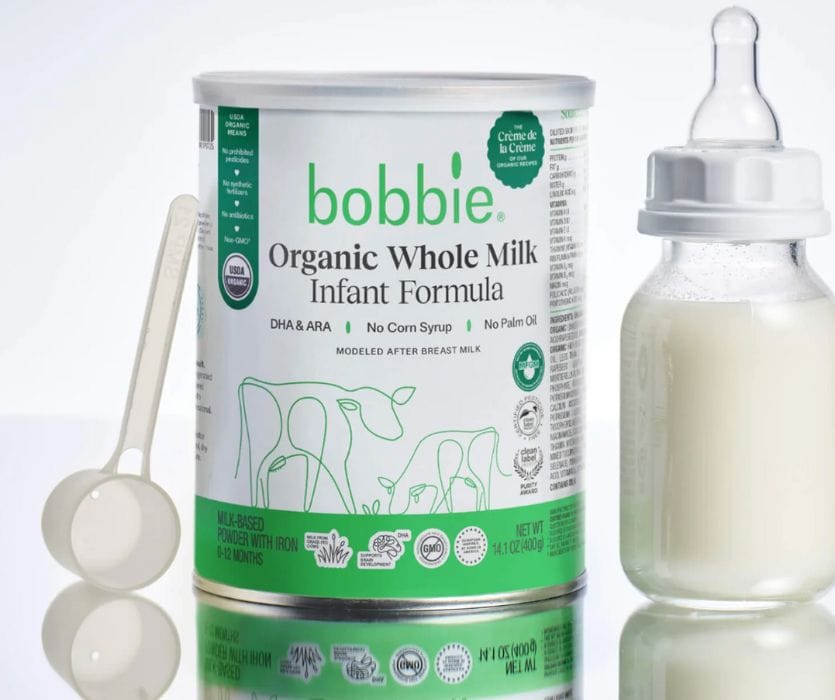
The quick answer: Bobbie makes four infant formulas, and all of them share the same core commitment: certified clean ingredients, no corn syrup, no palm oil, and a breast milk-inspired recipe made in a facility they own in Ohio alongside a co-manufacturer with 30 years of experience making organic infant formulas. All four of their formulas have been named a Top Choice by Consumer Reports after extensive heavy metal and chemical testing. If you're trying to figure out where to start, many babies do well with the Organic Whole Milk. It's their most popular formula, their closest to breast milk, has more naturally occurring milk fats and fewer added oils, and is the one I'd reach for first.
What's in this guide
- The formula I'd start with (and why)
- The other three formulas and when to consider them
- Is Bobbie safe?
- Is organic formula worth the price?
- Subscription vs. buying at Target
- Bobbie vs. European formulas (HiPP, Holle)
- Bobbie vs. Similac and Enfamil
I've been writing about pregnancy and new parenthood since 2010 and I've watched the formula aisle stay stubbornly the same for most of that time with just a handful of brands. Bobbie genuinely changed what was available to American parents when they launched in 2021, and I think it deserves the attention it's been getting.
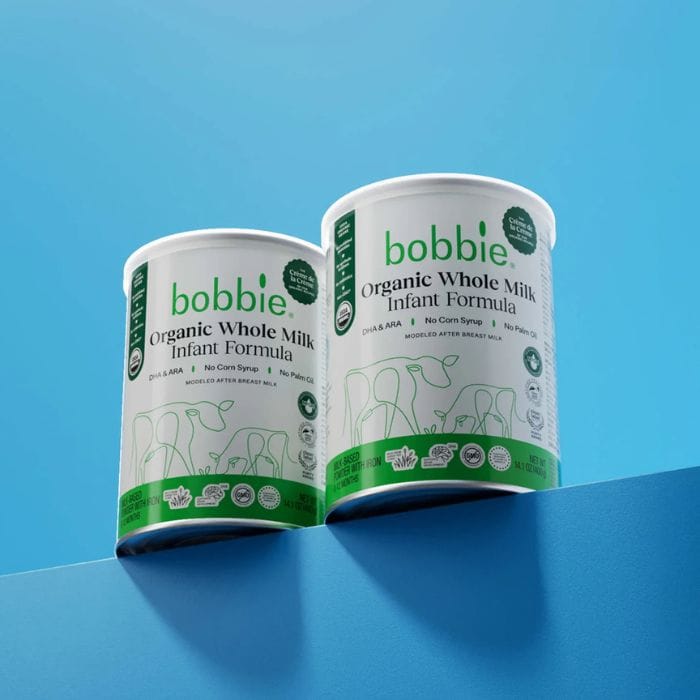
The formula I'd start with: Bobbie Organic Whole Milk
If your baby is feeding without drama, with no excessive gas, no inconsolable crying, no obvious digestive issues, this is where I'd start.
Bobbie's Organic Whole Milk starts from a simple idea: better milk, less added stuff. Most formulas rely on nonfat milk, then blend oils back in to hit the right fat profile. Bobbie starts with 100% organic, grass-fed whole milk from cows that graze on pasture year-round in New Zealand. That means more naturally occurring milk fat, plus MFGM (milk fat globule membrane), a component also found in breast milk that's been linked to benefits for infant brain development, immune function, and gut health. With DHA and choline added on top, the result is a formula genuinely built around early brain development.
The formula uses a 60:40 whey-to-casein ratio, which matches mature breast milk. The carbohydrate is 100% organic lactose (no corn syrup, no maltodextrin). DHA comes from plant-based algae at 20mg/100kcal, meeting EU standards (which are stricter than what the FDA requires). No palm oil. No soy allergens. No fillers.
The practical thing parents notice most? Softer stools. I know that sounds like a small thing until you're watching your baby strain, and then it becomes a very big thing.
It's dual certified USDA and EU Organic, Clean Label Project Certified (tested for 500+ contaminants and heavy metals), and every batch goes through 2,000+ safety checks. Bobbie also recently partnered with Light Labs, a third party accredited lab, to run an additional and voluntary test for 578 toxins, pesticides and phthalates monthly on every formula.
Pediatrician Lauren Crosby, MD, FAAP put it well: she said she was genuinely excited to see a whole milk formula made in the U.S. that brings together DHA, choline, and whole milk in one bottle specifically to support brain development.
Pricing:
- Stay Stocked subscription: $25.20/can
- Retail: from $28.99/can
- Where to buy: hibobbie.com (cheapest option + free lactation support with Stay Stocked), Target, and Whole Foods
The other three formulas (and when they make sense)
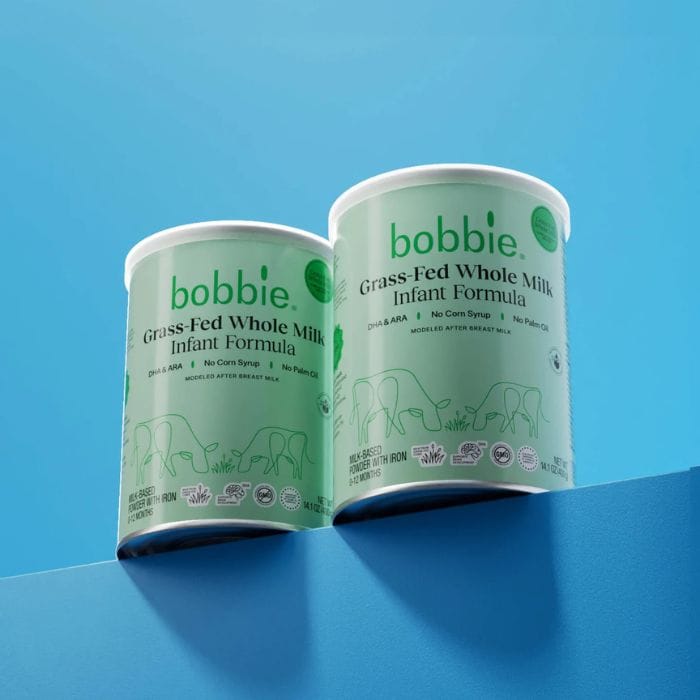
Bobbie Grass-fed Whole Milk – if budget matters
Same organic whole milk from grass-fed cows, same DHA and choline, same clean-label commitment. The only meaningful difference: no USDA Organic certification. The reason it costs less is simple: Organic lactose is in short supply globally, which drives up the cost of the certified version. The nutrition profile is identical.
If the organic badge is important to your family, go with the Organic Whole Milk. If you want the same whole milk nutrition at a lower price and organic certification isn't a dealbreaker, this is a genuinely smart alternative. It's also what I'd suggest for families who are price-sensitive but still want to stay with the Bobbie standard.
New customers can get 50% off a starter bundle directly on hibobbie.com, which makes it a low-risk way to see how your baby does.
- Stay Stocked subscription: $20.70/can
- Retail: from $22.99/can
- Where to buy: hibobbie.com (best price + subscriber perks), Target, Walmart, Amazon
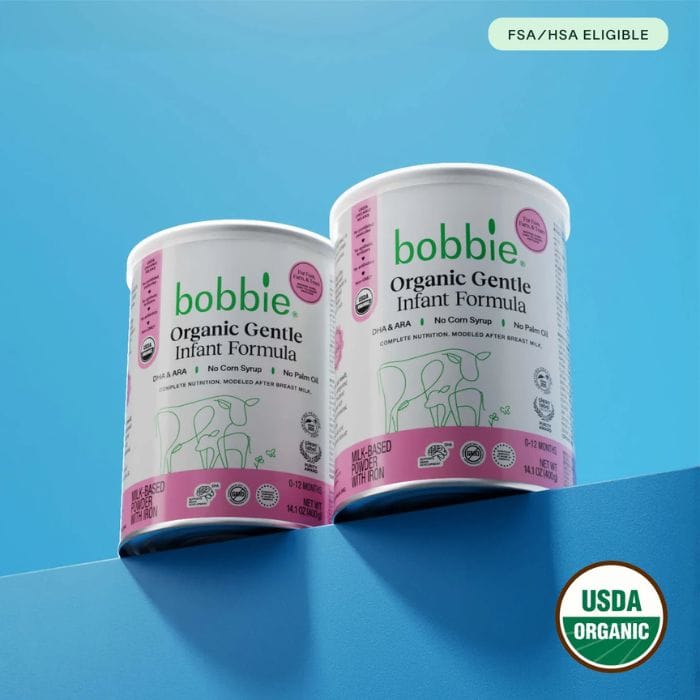
Bobbie Organic Gentle – for gassy, fussy, or crying babies
Most "gentle" formulas handle digestion by swapping lactose for corn syrup solids. Bobbie's Gentle is the only USDA Organic gentle formula that uses 100% lactose instead, which keeps it closer to breast milk while still doing the actual job of a gentle formula.
The proteins are partially hydrolyzed, meaning they're broken down before your baby drinks them. That's the mechanism that actually helps with gas and fussiness.
Nurse practitioner Raven Ebanez, MSN, APRN, says she recommends it to patients whose babies are still sensitive even after trying other gentle brands, and that babies dealing with reflux, colic, and constipation often turn a corner quickly after switching. I've heard versions of that story from a lot of parents over the years.
If your baby is uncomfortable after feeds, pulling up their legs, or just inconsolably unhappy and you've ruled out other causes, this is where I'd go.
Pricing:
- Stay Stocked subscription: $28.80/can
- Retail: from $29.99/can
- Where to buy: hibobbie.com (best price + subscriber perks), Target, Whole Foods, Walmart, Wegmans, Meijer, Amazon
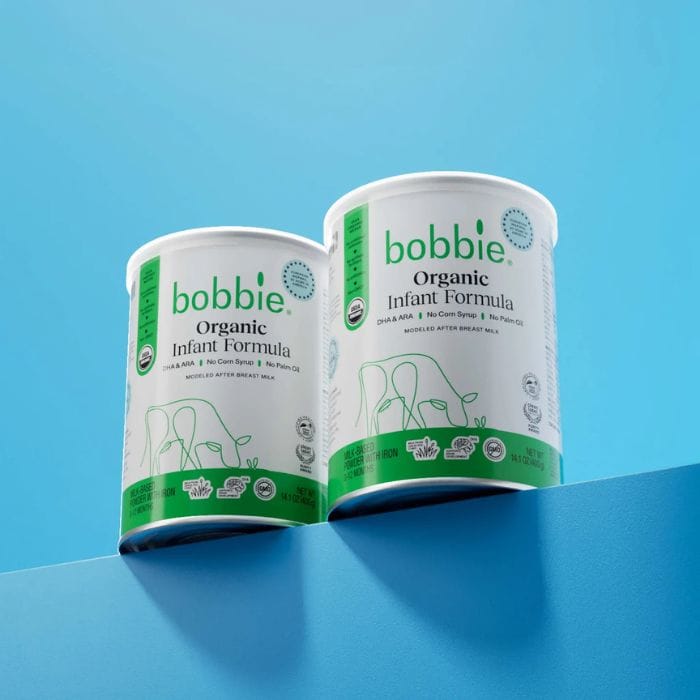
Bobbie Organic Infant Formula – the original recipe
This is where Bobbie started in 2021, and it's still a tried and trusted formula. It uses organic nonfat milk rather than whole milk, so it relies a bit more on added oils for fat than the Organic Whole Milk. That said, still USDA Organic, still 100% lactose-based, still free of corn syrup and palm oil, still Clean Label Project Certified.
Where it has a unique edge: it's the only Bobbie formula available in a larger 24oz can, which some families find more economical and practical. If you want their most established, longest-running recipe with the most track record (or if the larger format works better for your household), this is the one.
- hibobbie.com (best price + subscriber perks), Target (14.1oz and 24oz), Whole Foods, Costco (online), Amazon
What all four have in common:
- No corn syrup, palm oil, maltodextrin, soy allergens, gluten, or persistent pesticides
- 100% lactose as the carbohydrate
- DHA at 20mg/100kcal, Vitamin D at 75 IU/100kcal, Iron at 1.2mg/100kcal (meeting both EU and FDA requirements)
- Clean Label Project testing for 400 chemicals
- Light Labs screening for 550+ toxins and contaminants
- 2,000+ safety checks per batch
- All four officially named a Consumer Reports Top Choice after 2026 testing

Is Bobbie safe?
Yes. But I understand why you're asking, and I think it's worth taking seriously rather than just saying "yes, move on."
If you were feeding a baby during the 2022 formula shortage, you know exactly what that felt like. Issues at a single Abbott facility, which was supplying the vast majority of powdered formula nationally, disrupted access across the country. Shelves went empty. Parents were rationing. It was genuinely frightening, and it exposed how fragile the whole system was.
So what did Bobbie do? They acquired their own state of the art facility, one of the first new infant formula plants in the U.S. in decades, specifically to avoid the kind of single point of failure that caused the 2022 shortage. Mixing, drying, and canning all happen in the same building, so there's less handling and fewer chances for something to go wrong along the way.
As of November 2025, they added SRC testing, screening batches of whole milk powder for spore-forming bacteria similar to those linked to infant botulism, on top of their existing 2,000+ safety checks. Their partnership with Light Labs tests for an additional 578 toxins like BPAs, phthalates and plasticizers. Because they manufacture in the U.S., they're subject to more frequent and rigid FDA audits than foreign-made formulas.
Is organic formula worth the extra cost?
It depends on what you're trying to buy.
The nutritional difference between organic and conventional formula isn't dramatic for most healthy, full-term babies. The FDA requires the same baseline nutrient profile from both. What you're mainly paying for with organic certification is reduced exposure to synthetic pesticides and herbicides in the ingredient supply chain, plus stricter farming standards – no antibiotics, no GMOs, tighter animal welfare requirements.
If that matters to you, Bobbie Organic is a genuine expression of those values, not just a label premium. If budget is the bigger concern, the Grass-fed Whole Milk gives you the same whole milk nutrition and the same clean-label commitment for less because, as mentioned above, organic lactose is genuinely expensive to source right now, and that cost flows through to the price.
Neither choice is wrong. You know your priorities better than I do.

Subscription vs. buying at Target
Buying at Target is completely fine. No commitment, no account, grab it when you need it. The Organic Whole Milk runs from about $28.99/can at retail.
The Stay Stocked subscription brings that down to $25.20/can for the Organic Whole Milk, with free shipping. For a fully formula-fed baby going through 4 - 6 cans a month, that's a decent savings over the course of a year.
But one of the best perks is that Stay Stocked members get free 1:1 sessions with board-certified lactation and feeding experts, valued at $250. In the early weeks, when feeding feels impossible and you're not sure if what you're seeing is normal, having access to an actual expert is worth more than the per-can savings. That's a genuinely useful benefit that most formula brands simply don't offer.
My take: if you're combo-feeding and only using formula occasionally, buy it at Target. If you're fully formula-feeding or know you'll be leaning on it heavily, the subscription math works and the expert support is a real bonus.
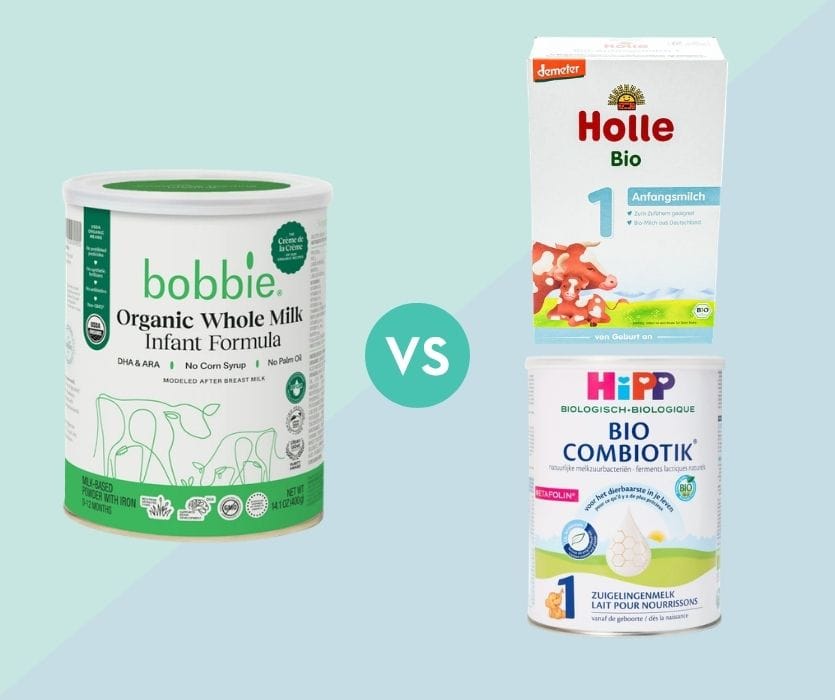
Bobbie vs. HiPP and Holle
This is the question I hear most from parents who were importing European formula before Bobbie existed, and it's legitimate, because HiPP and Holle built a genuine following for good reasons.
Bobbie was built to bring European-style standards to a product that's actually regulated in the U.S. HiPP infant formulas are not currently FDA-regulated or approved for sale in the United States, which means importing them puts you outside domestic safety oversight. That's not a dealbreaker for everyone, but it's worth understanding. Bobbie meets both FDA and most EU nutritional standards, so you get the European-style ingredient philosophy without the grey area.
On ingredients, the three formulas are genuinely similar. All three are organic, lactose-based, DHA-fortified, and free of corn syrup solids.
One thing to know upfront: HiPP isn't FDA-reviewed for sale in the U.S. The FDA doesn't "approve" any infant formula – it just requires manufacturers to notify the agency before selling a new one in the U.S. HiPP hasn't done that, so it's only available here through importers, not through the usual FDA-reviewed channels. The FDA's own advice is to be cautious with imported formula bought online, since it may not meet U.S. safety standards. That doesn't necessarily mean it's unsafe (European formula follows its own strict standards), but it does mean it hasn't gone through the U.S. review process with the FDA.
As for what's in each formula:
- Palm oil: HiPP uses it in most formulas (organic and sustainably sourced, per HiPP), except its palm-oil-free PUR line.
- Carbohydrates: HiPP's Dutch and UK versions use lactose only and no maltodextrin or starch. (HiPP formulas sold in some other countries, like Germany, do include starch.) Holle is harder to pin down. Some current listings show lactose-only, others show lactose plus maltodextrin, likely because the recipe has changed over time or varies by version. If this matters to you, it's worth checking the ingredient panel on the actual can you're buying rather than relying on older product descriptions online. Bobbie uses lactose only, across the board.
- Probiotics/prebiotics: HiPP adds both. Bobbie doesn't.
- History and farming: Holle has been around the longest and uses biodynamic (Demeter) farming.
- Iron: It’s worth noting that in 2021, several HiPP and Holle products (including HiPP Comfort, HiPP Dutch Stage 1, HiPP German Stage 1, HiPP UK Stage 1, and Holle's Stage 1 and PRE lines) were recalled because they had less than 1 mg of iron per 100 calories, which is below what the FDA considers adequate for infants. Worth checking that any can you buy is a current formulation, not old stock.
If you were importing European formula because you couldn't find a clean American-made option, Bobbie is the answer you were waiting for. If you specifically want probiotics or biodynamic certification, HiPP or Holle still have a case. Just go in with eyes open on the regulatory picture.
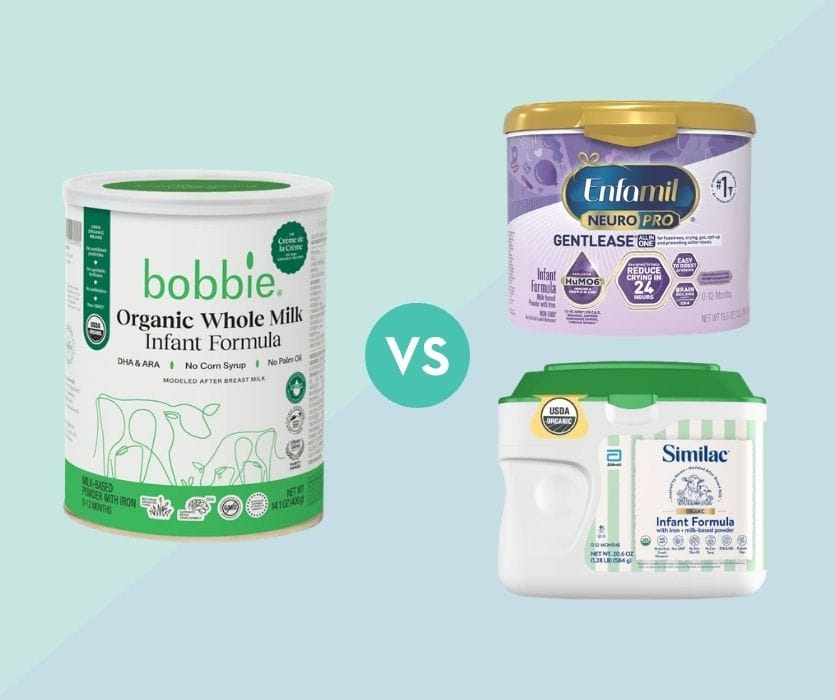
Bobbie vs. Similac and Enfamil
These dominate the shelf at every pharmacy and grocery store, and they're covered by WIC in most states, which matters so let's be honest about the comparison.
The base nutrition across all three is comparable. They all meet FDA requirements and will support healthy infant growth. The differences are in what's in them and what's left out.
Carbohydrates: Bobbie uses 100% lactose. Many Similac and Enfamil lines (particularly their sensitive and specialty formulas) use corn syrup solids, either partially or fully. See the ingredient lists for Similac Sensitive and Enfamil NeuroPro Sensitive. The clinical significance of this in healthy, full-term babies hasn't been definitively established, but for parents who want to mirror breast milk's carbohydrate profile, lactose-only is the closer match.
Palm oil: Palm olein oil has been linked to reduced calcium absorption and firmer stools in some babies, a finding backed by randomized crossover research. Bobbie doesn't use it.
Protein ratio: Bobbie uses a 60:40 whey-to-casein ratio. Abbott doesn't publish a whey-to-casein ratio for its standard Similac formulas (Advance, 360 Total Care) in its public materials, but a representative confirmed by phone that these formulas use a 48:52 whey-to-casein ratio, meaning Similac's standard formulas are casein-dominant, while Bobbie's is whey-dominant. Whey is the more easily digestible protein, so a higher whey ratio is generally associated with formulas designed to be gentler on digestion (60:40 is a similar ratio to mature breast milk), whereas casein-dominant formulas form a thicker curd in the stomach and are digested more slowly.
Where Enfamil and Similac have a genuine edge: Both are WIC-eligible, though which one is covered depends on your state because WIC is administered at the state level, and almost all infant formula provided through the program comes from either Abbott (Similac) or Mead Johnson (Enfamil), with the specific brand varying by state contract. Bobbie is not WIC-eligible; however, you can use your SNAP benefits (via your EBT card) to purchase Bobbie formula at Target and online through Thrive Market.
The short version: if clean ingredients, organic certification, and a breast milk-inspired profile are priorities and budget allows, Bobbie wins on those criteria. If you're on WIC, or cost is the deciding factor, Similac and Enfamil are safe, well-researched formulas that millions of babies have thrived on. Formula is food and the best formula is the one your baby tolerates and you can consistently access and afford.
So, Is Bobbie Worth It?
Here's what I'd tell a friend: if Bobbie fits your budget and your baby tolerates it well, go for it. It's one of the cleanest, most thoughtfully made formulas available to American parents right now. But if something else works better for your family – different formula, different budget, different situation – that's okay too. At the end of the day, you're the one who knows your baby best.
Next reads:
- Formula feeding basics guide for preparation tips, storage rules, and common troubleshooting.
- How to Switch Baby Formula: Creating a Smooth Transition
About the Author: Amy Morrison is a mom of two boys who has been writing about pregnancy and new parenthood since 2010. Her mission is to provide judgment-free, research-backed information so every parent can make confident choices for their family.
Medical Disclaimer: This article is for informational purposes only and is not a substitute for professional medical advice. Always consult with your pediatrician before starting or changing your baby's formula.
Disclosure: This review was created in partnership with Bobbie, based on extensive research and interviews with formula-feeding parents. Quotes from Dr. Lauren Crosby and NP Raven Ebanez were provided by Bobbie as part of this partnership and were not independently gathered by the author. It also includes affiliate links – if you make a purchase through them, we may earn a small commission at no extra cost to you. That helps us keep our content free. As always, I don't recommend products I wouldn't use myself.
Information accurate as of August 5, 2026.
Sources
- Bobbie Organic Whole Milk Infant Formula — Product Page
- Bobbie Grass-Fed Whole Milk Infant Formula — Product Page
- Bobbie Organic Gentle Infant Formula — Product Page
- Bobbie Organic Infant Formula (Original Recipe) — Product Page
- Bobbie Medical — Formula Comparison for Healthcare Professionals
- Bobbie's Full Suite of Infant Formulas Named "Top Choice" by Consumer Reports for Heavy Metal Safety — Bobbie press release, March 2026
- How We Protect Against Baby Formula Recalls — Bobbie, on FDA notification requirements
- Calcium and Fat Metabolic Balance, and GI Tolerance in Term Infants Fed Formulas With and Without Palm Olein and Palm Kernel Oils: A Randomized Blinded Crossover Study — BMC Pediatrics, 2013
- Impact of Palm Olein in Infant Formulas on Stool Consistency and Frequency: A Meta-Analysis of Randomized Clinical Trials — Food & Nutrition Research, 2017
- Able Groupe Recalling Products Labeled as Infant Formula — Insufficient Iron Levels — FDA recall notice, August 2021 (HiPP, Holle, Bioland, Kendamil)
- Questions & Answers for Consumers Concerning Infant Formula — FDA, on premarket notification requirements
- Infant Formulas Marketed in the U.S. — FDA, official list of notified formulas
- Kendamil Organic First Infant Milk — Product Page
- Target.com — pricing verified as of August 2026
- Dr. Lauren Crosby, MD, FAAP and NP Raven Ebanez, MSN, APRN — quotes provided via Bobbie marketing materials, June 2026
Leave a Comment