

Quick answer: If your baby is gassy, fussy, or seems uncomfortable after feeds, look for a formula with partially hydrolyzed protein (broken down so it's easier to digest) and pay attention to the carbohydrate source – that's where these formulas differ more than people realize. I've put together five gentle formulas worth knowing about below, along with what makes each one different and who tends to be the best fit for it.
I'll walk you through that, plus how to figure out if your baby actually needs a "gentle" formula in the first place, because not every fussy phase means you need to switch.
Is it actually a sensitivity, or just... a baby?
Before you go formula shopping, it's worth pausing here, because I got this wrong with my first son. I assumed every grunt and squirm meant something was wrong with what he was eating. Sometimes it did. A lot of the time it was just newborn digestion being newborn digestion. Gas is normal, a few fussy hours in the evening is normal, and spit-up that doesn't bother the baby (even if it horrifies you) is usually fine.
Signs that point more toward an actual sensitivity:
- Consistent fussiness or crying after most feeds, not just occasionally
- Visible discomfort with gas – pulling legs up, arching the back
- Spit-up that seems to bother the baby, not just make a mess
- A pattern that doesn't improve with basic troubleshooting (paced feeding, more frequent burping, smaller volumes)
If that's what you're seeing, a gentle formula is a reasonable next step. If your baby is also showing signs like blood in the stool, poor weight gain, or severe reflux, that's a call to your pediatrician first and formula switching shouldn't be the first move there.
What "gentle" formula means
So what makes a gentle formula "gentle," or different from a standard formula? The proteins are broken down into smaller pieces (called partially hydrolyzed protein), which makes them easier for your baby's digestive system to handle — not magic, just smaller protein molecules. This can also make the formula smell a bit stronger than usual, which is normal and just a sign of the broken-down protein. Many gentle formulas also skip palm oil, which has been linked to firmer stools and lower calcium absorption in some babies¹. It's not a big deal for every baby, but good to know if your baby's already uncomfortable.
Gentle vs. Sensitive formula
Gentle formulas focus on protein. Sensitive formulas focus on lactose (milk sugar). They reduce or remove the lactose, often replacing it with corn syrup solids or corn-based syrup as the carb source, since some babies tolerate that better. The tradeoff is that removing lactose moves the formula further from what's naturally in breast milk. Since true lactose intolerance is rare in babies, and protein digestion issues are much more common, gentle formula is usually the first thing pediatricians suggest.
5 gentle formulas worth considering, and how they differ
These aren't ranked by "best" because they're genuinely solving slightly different problems, so I've grouped them by what each one is actually built for.
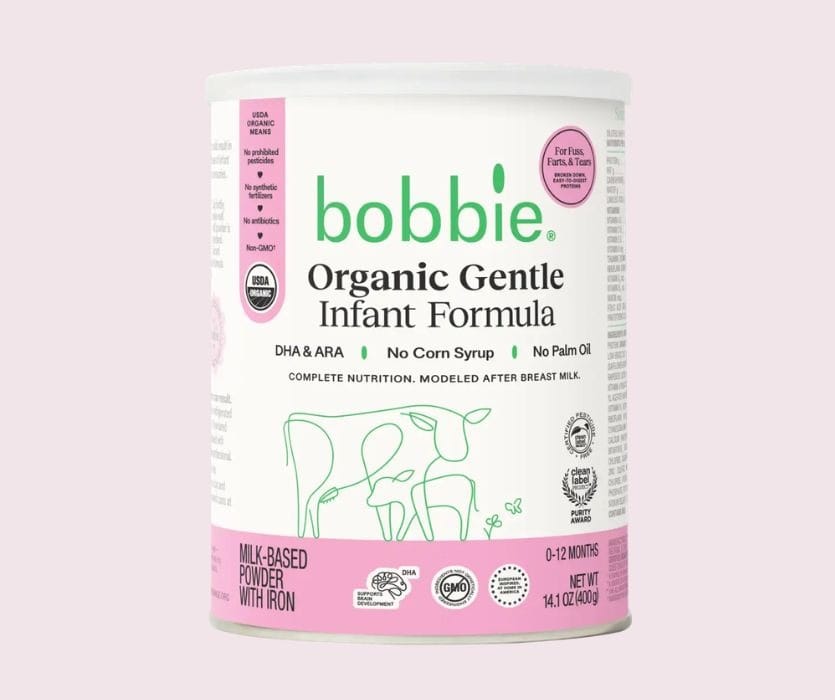
1. Bobbie Organic Gentle²
It uses partially hydrolyzed whey protein (so the gas-and-fussiness mechanism is there) but keeps the carbohydrate source as 100% organic lactose instead of swapping in corn syrup solids or maltodextrin, which most "gentle" formulas do. It's USDA and EU Organic certified, uses an expeller-pressed fat blend (no hexane or solvents), plant-based algae DHA, and is Clean Label Project Certified, meaning it's tested for 400+ contaminants and heavy metals. This recipe is a first of its kind and the only gentle formula to use 100% lactose in the US.
Best for: Parents who want the gas/fussiness benefit of hydrolyzed protein without moving away from lactose, and who care about organic certification and contaminant testing. This is where I'd start for most sensitive-but-otherwise-healthy babies. Find it here.

2. Enfamil NeuroPro Gentlease³
This is the formula most pediatricians will mention first, mostly because it's been around a long time and is everywhere. It uses partially hydrolyzed whey and casein proteins plus reduced (not eliminated) lactose, and adds MFGM (milk fat globule membrane) along with DHA. Enfamil's own research points to gas reduction within 24 hours for a lot of babies.
Best for: Parents who want a widely available, heavily studied option and don't need it to be organic. It's a reasonable default if you want something every pharmacy and big-box store carries. Find it here.

3. Dr Brown's Good Start Soothe Pro (Previously Gerber)⁴
The standout feature here is the added live probiotic, L. reuteri, alongside partially hydrolyzed whey protein and reduced lactose. If your baby's issue leans more toward colicky crying than straightforward gas, the probiotic angle is worth knowing about. Some research on L. reuteri specifically looks at reducing crying time in colicky infants, not just gas⁵.
Best for: Babies whose main issue is prolonged crying/colic rather than gas alone. Also tends to be one of the more budget-friendly options. Find it here.
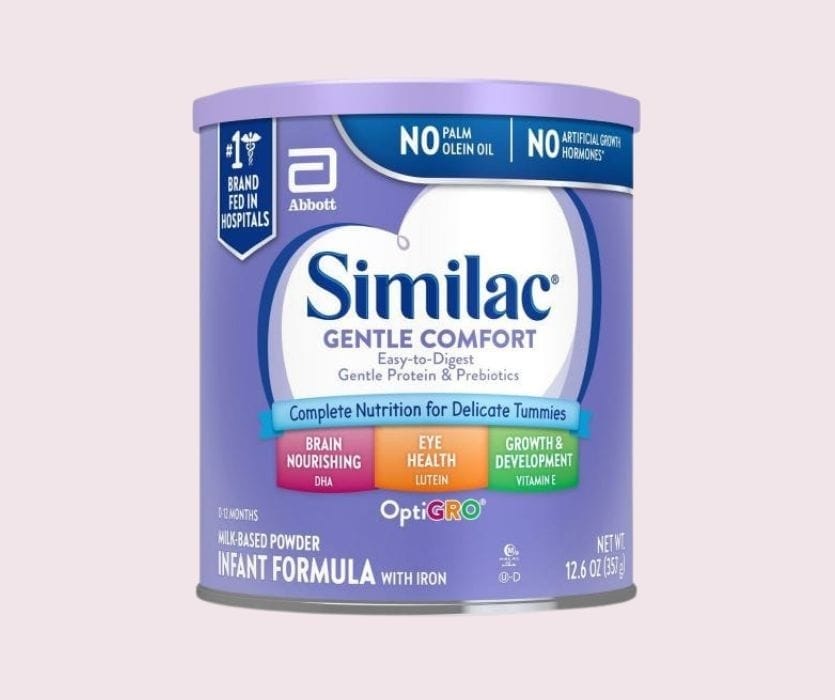
4. Similac Gentle Comfort (Previously Pro-Total Comfort)⁶
This one also uses partially hydrolyzed whey protein, plus FOS prebiotics, and skips palm olein oil, which some parents find helps with stool consistency. It's a solid middle-ground pick if you want hydrolyzed protein without committing to an organic price point.
Best for: Parents managing both gas and occasional constipation, since the no-palm-oil angle plus prebiotics is specifically aimed at stool softness. Find it here.
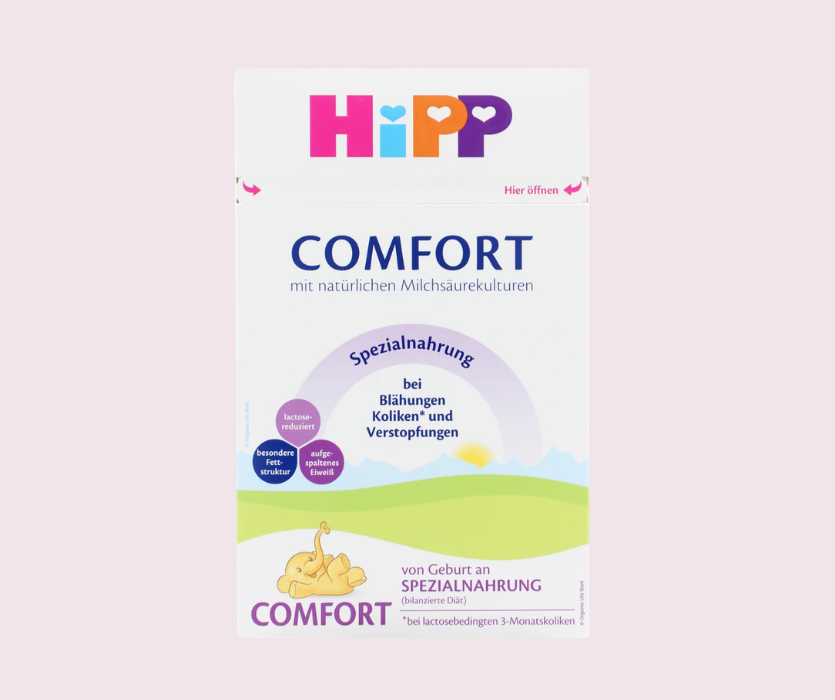
5. HiPP Comfort (or HiPP AR, for reflux-leaning fussiness)⁷
If you want an organic European formula and are okay with ordering from a 3rd party website, HiPP's Comfort line uses partially hydrolyzed protein and has EU organic certification, with a different sourcing/processing approach than the U.S. brands above. Some parents specifically reach for HiPP AR when fussiness comes with a reflux component, since it includes a thickener that isn't standard in most U.S. gentle formulas.
Note: HiPP formulas are not FDA-registered or regulated to U.S. infant formula standards⁸. They're manufactured to EU standards and imported through 3rd-party distributors rather than sold through the standard U.S. supply chain. Adding to the confusion, HiPP Comfort comes in different country versions (UK and German are the most common), which vary in things like probiotic content and carbohydrate source — so it's worth confirming exactly which version you're getting.
Importing a formula that is not registered with the FDA comes with risks, including seizure at U.S. customs, improper storage temperatures during transit, and a lack of a recall notification system⁹. Talk to your pediatrician before using an imported formula, especially for infants who are immunocompromised or at higher risk.
Best for: Parents specifically wanting EU organic standards, or whose baby's fussiness seems tied to reflux rather than gas alone (talk to your pediatrician about this distinction first). Find it here.
A note on what these aren't
None of these are extensively hydrolyzed, hypoallergic, or amino-acid-based formulas like Nutramigen or Alimentum. Those are a different category entirely, usually reserved for diagnosed cow's milk protein allergy or malabsorption, and that diagnosis should come from your pediatrician. If gas and fussiness don't improve after a 2-week trial period on a partially hydrolyzed formula, that's the conversation to have next.
How to switch formulas without making things worse
This part trips people up so it's worth having a game plan:
- Don't switch cold during a growth spurt or illness. You won't be able to tell what's causing what.
- Give it 3 - 5 days before judging whether it's working. Digestive systems need a beat to adjust to any change, even a good one.
- Watch stool consistency and color, not just fussiness. A shift in stool color or texture is normal in the first few days; persistent diarrhea or constipation is not.
- Keep your old can until you're confident in the switch, just in case you need to go back.
What other parents tend to ask next
Is gentle formula necessary, or marketing? For a genuinely fussy or gassy baby, the protein and carb differences are real and mechanistic, not just branding. For a baby with no symptoms, you don't need it and regular formula is fine.
Can I mix gentle formula with breast milk? Yes, this is common and fine. Prepare formula using the mixing ratios on the can before adding it to expressed breast milk. Never use breast milk in place of water to mix powdered formula.
Does gentle formula cost more? Usually, yes, generally a few dollars more per can than standard formula. Subscription options (Bobbie's Stay Stocked program runs from $28.80/can vs. $31.99 retail, for example) can soften that if your baby tolerates it well and you're not switching again soon.
Is gentle formula FSA or HSA eligible? Generally, no. Standard and gentle/sensitive formulas are typically treated by the IRS as food rather than a medical expense, so FSA, HSA, and HRA funds usually can't be used for them, even for the gentle or organic versions. That said, Bobbie partners with Truemed on FSA/HSA programs for its Gentle formula, which you can sign up for when you purchase it through their website.
The one exception is if your pediatrician diagnoses a specific medical condition (like a cow's milk protein allergy) and provides a Letter of Medical Necessity, in which case some plans will reimburse the cost difference between standard and specialty formula, though that's not guaranteed and varies by plan administrator. If you're hoping to use pre-tax dollars, it's worth a quick call to your FSA/HSA administrator before assuming it'll be covered.
What if gentle formula doesn't help after a week or two? Talk to your pediatrician about whether you're dealing with something beyond typical fussiness – reflux, an allergy, or something else that needs a different approach (like an extensively hydrolyzed or amino-acid-based formula, which are different categories entirely).
The bottom line
Most "gentle" formulas are solving for one thing: protein digestibility.
The differences between them come down to the carbohydrate source, what's added (probiotics, MFGM, anti-reflux thickeners), and how transparent the brand is about sourcing and testing. Of the five above, Bobbie Organic Gentle is where I'd start for most babies, mainly because it's the rare option that doesn't ask you to trade hydrolyzed protein for a bigger departure from breast milk's actual composition. But Enfamil Gentlease and Gerber's SoothePro are both reasonable, well-studied alternatives if availability, probiotics, or price are bigger factors for your family, and HiPP is worth a look if reflux is part of the picture.
If you're still in the deciding phase, my advice is the same as it's always been: give whatever you choose a real week before judging it, and trust what you're actually seeing in your own baby over what any label promises.Have questions about formula feeding, combo feeding, or just want to compare notes? Drop them in the comments.
Next read: Baby Reflux: What Every Parent Should Know About Spit-Up, GER, and GERD
This post may contain affiliate links. If you purchase through my links I may earn a small commission at no extra cost to you. Thanks for supporting Pregnant Chicken — it keeps the lights on and supports our free content. Information obtained as of August 5, 2026, from the following websites:
Sources
- Bobbie Organic Gentle Infant Formula — Product Page
- Enfamil NeuroPro Gentlease — Product Page
- Gerber Good Start SoothePro Powder Infant Formula — Product Page
- Gerber Good Start Soothe Formula Gives Babies Less to Cry About
- Similac Pro-Total Comfort — Product Page
- HiPP Comfort Milk — Product Page
- Calcium and Fat Metabolic Balance, and GI Tolerance in Term Infants Fed Formulas With and Without Palm Olein and Palm Kernel Oils: A Randomized Blinded Crossover Study
- Questions & Answers for Consumers Concerning Infant Formula
- Infant Formulas Marketed in the U.S.

Leave a Comment