
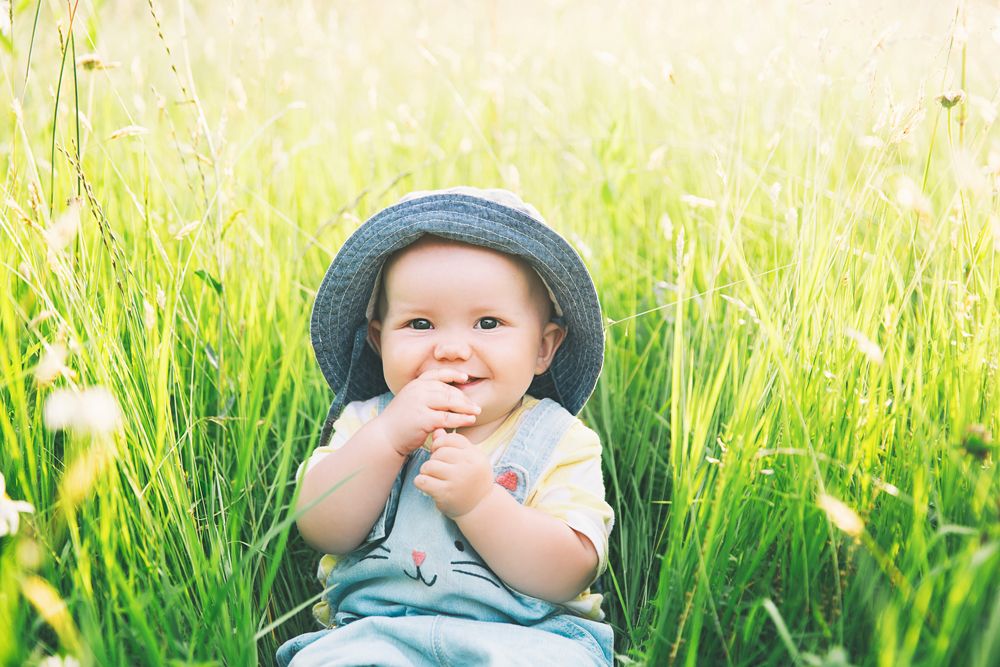
If you're a pale person who has ever cried in a sunscreen aisle, hi, same. I'm a redhead, which is basically just a vampire, and when I had my first baby, I became mildly obsessed with sun safety. He was even paler than me which I didn't think was biologically possible.
Here's everything I've learned about keeping babies safe in the sun.
If you're looking for items listed in this post, I have them all here in one shoppable spot.
Why babies need extra sun protection
Baby skin isn't just small, it's genuinely different. It's thinner, more absorbent, and because babies have a higher surface-area-to-body-weight ratio than adults, anything you put on it hits their system harder. Think of it like this: you've got three yards of fabric covering your body, a baby has maybe half a yard. That ratio matters.
Because of this, the general recommendation is:
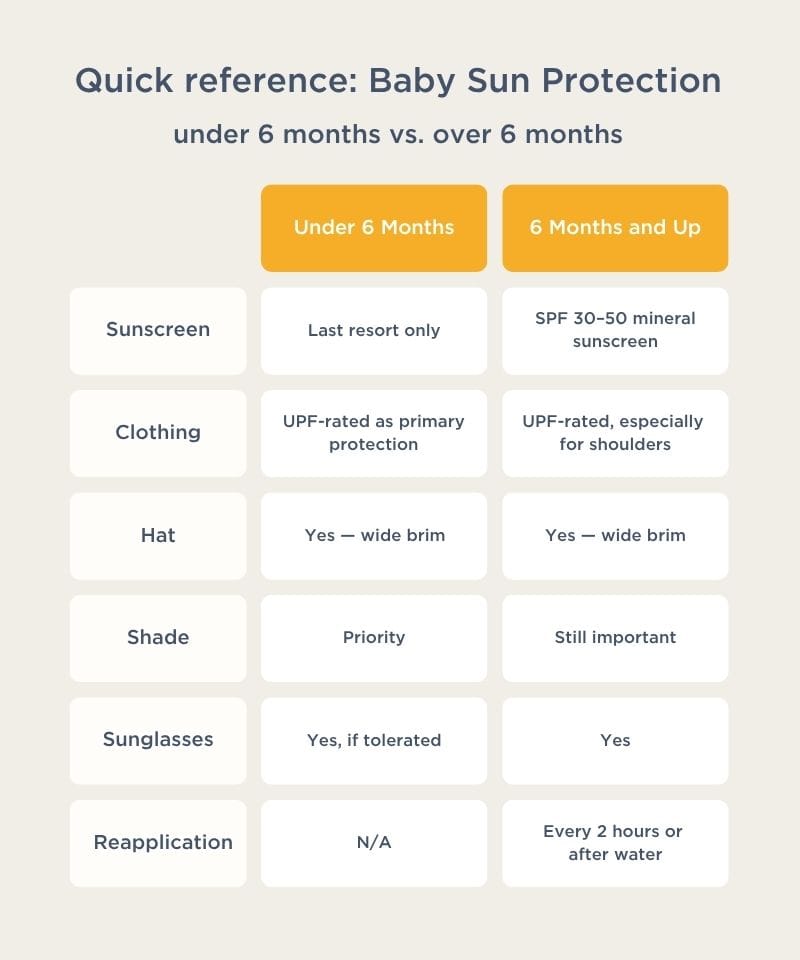
- Under 6 months: Skip sunscreen if you can. Prioritize shade, protective clothing, and a hat. Sunscreen is a last resort.
- 6 months and up: Sunscreen is fair game (and way better than a sunburn).
That said, if you're standing in a Phoenix parking lot with a 3-month-old and not a tree in sight, put something on that kid. A real sunburn is worse than any sunscreen ingredient.
Chemical vs. mineral sunscreen – what's the difference?
This trips a lot of people up, so let's clear it up fast.
- Chemical sunscreens contain ingredients (like avobenzone or oxybenzone) that penetrate the skin and filter UV rays from within.
- Mineral sunscreens (sunblock) sit on the skin's surface and physically block UV rays using zinc oxide or titanium dioxide.
For babies, most pediatric dermatologists recommend mineral sunblock. Zinc oxide and titanium dioxide are considered non-toxic in normal amounts, which is reassuring when your baby treats their hands like a full buffet. (I can't speak to what happens if they eat a whole tube, so let's just not find out.)
What SPF do babies need?
Most pediatric dermatologists and the American Academy of Dermatology recommend a minimum of SPF 30, and SPF 50 is a smart choice for babies and fair-skinned kids. Here's a quick way to think about it:
- SPF 30 blocks about 97% of UVB rays
- SPF 50 blocks about 98% of UVB rays
- SPF 100 blocks about 99% of UVB rays
The jump from SPF 30 to 50 is worth it for little ones. The jump from 50 to 100? Not really. Save your money and just reapply more consistently — that matters more than chasing a higher number.
How to apply sunscreen on a baby
This is where a lot of parents (myself included, early on) drop the ball. Here's what actually makes a difference:
- Apply 15 minutes before going outside so it has time to bond to the skin — this is especially true for mineral sunscreens, which is what most people are using on babies
- Use more than you think you need — most people apply about half the amount that's actually effective. For a baby, a nickel-sized amount per body area is a reasonable starting point
- Don't forget the easy-to-miss spots: ears, back of the neck, tops of feet, and the part in their hair if they have any
- Reapply every two hours — or immediately after swimming or heavy sweating, regardless of what the clock says
What "water resistant" means on a label
I assumed "water resistant" meant my kids were basically waterproofed for the afternoon. It does not mean that. In the US, the FDA requires sunscreen to state on the label whether it remains effective for either 40 minutes or 80 minutes of swimming or sweating. After that window, it needs to be reapplied.
So if your sunscreen says "water resistant 80 minutes" and your kid has been in and out of the splash pad for two hours, you're past the window. Reapply and move on — no guilt, just sunscreen.
Baby sun gear worth buying (and the stuff I actually used)
Shade shelters
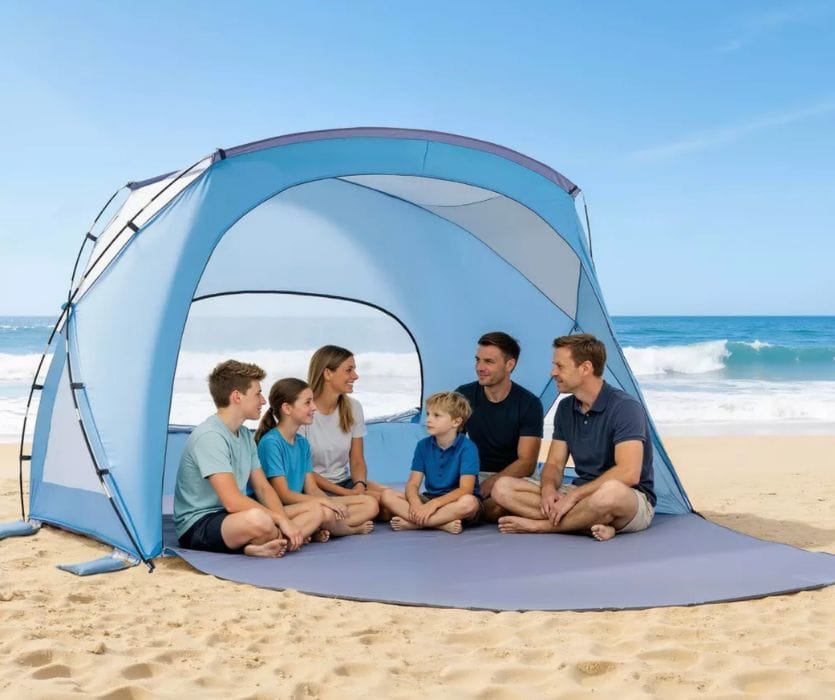
A good beach shelter buys you a real break from the sun. This Beach Shelter is a solid pick because it's big enough to move around in, so you're not crouched over dealing with a sand covered toddler tantrum because they have sand on their feet. Veer's Base Camp Shelter is another one worth looking at if you want something sturdier.
Sun protective clothing
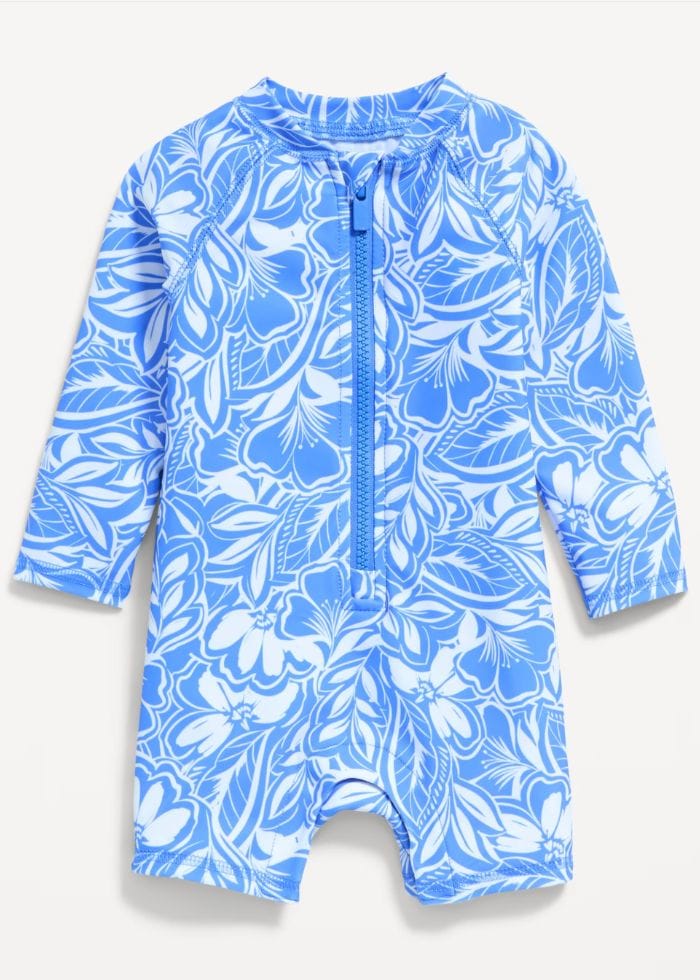
Here's a quick rule: if you can see your hand clearly through the fabric, it's not doing much. Look for UPF-rated clothing, especially for shoulders and the back of the neck — the high-burn zones that are easy to miss with sunscreen.
I'm a big fan of Rashguards because they cover those easy-burn areas like shoulders and backs. Old Navy and Target always have great, affordable selections. Look for styles with zip or snap crotches if you want to keep your sanity during beach diaper changes.
Hats
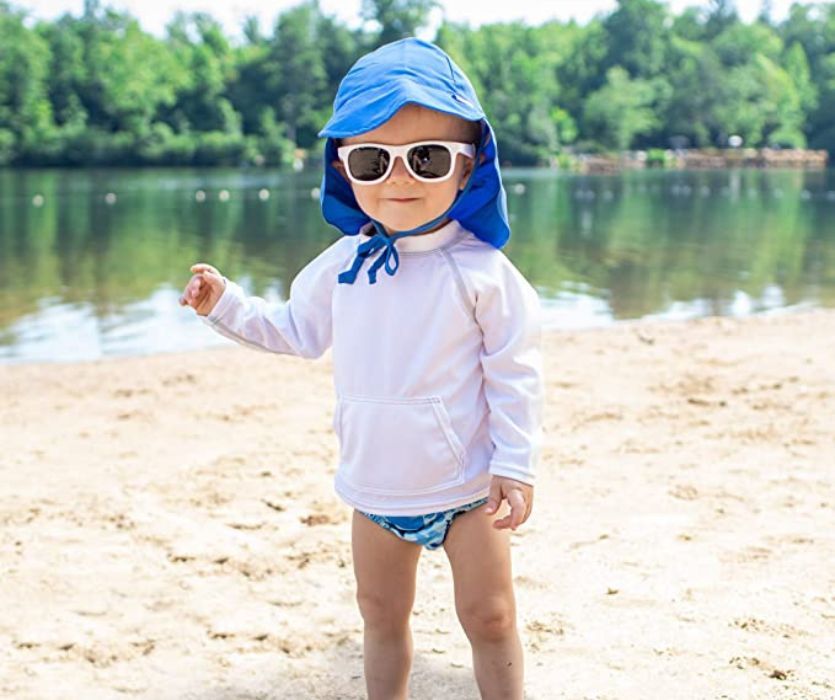
Babies fall into two categories: "Hat? No problem" and "Get this tarp of Satan off my head." If you can get them used to hats early, you're in a better position — but I fully acknowledge that what was totally fine on Tuesday can become completely unacceptable by Wednesday for no reason.
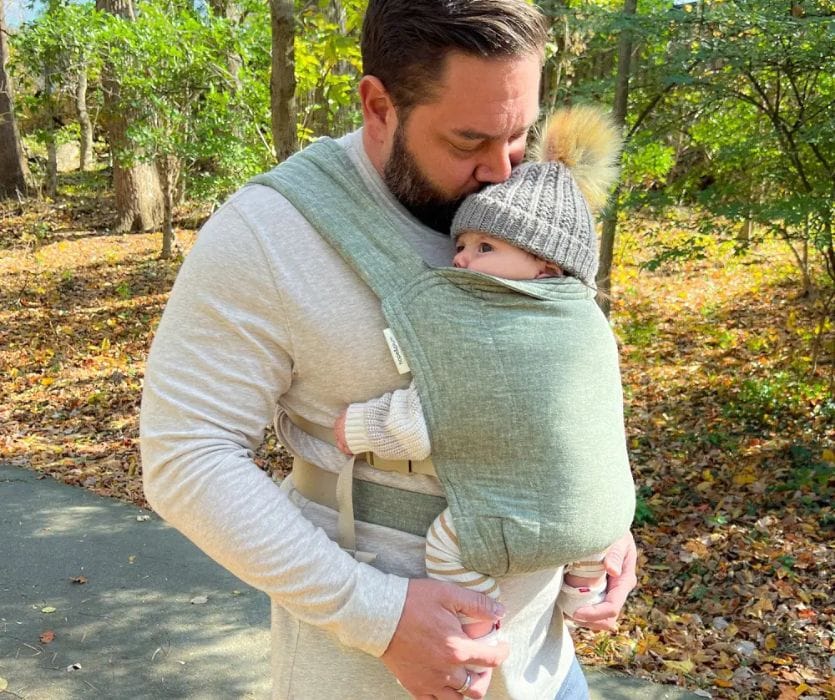
Green Sprouts hats are great for coverage and have a little Houdini-proofing built in. Also: if you're wearing your baby in a carrier, a wide-brimmed hat on you throws a ton of shade on them. I looked absolutely unhinged at the park doing this and I have zero regrets.
Sunglasses
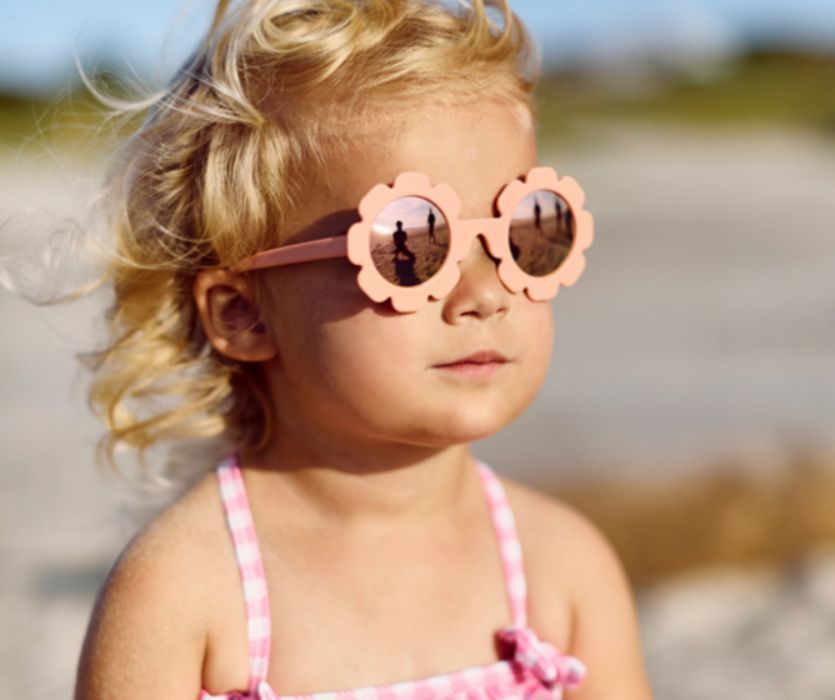
Before kids, I thought baby sunglasses were just adorable accessories. Turns out, UV protection for little eyes is genuinely important. Babiators are the brand I always recommend — they're flexible, durable, and come with a lost/broken guarantee.
Car window protection
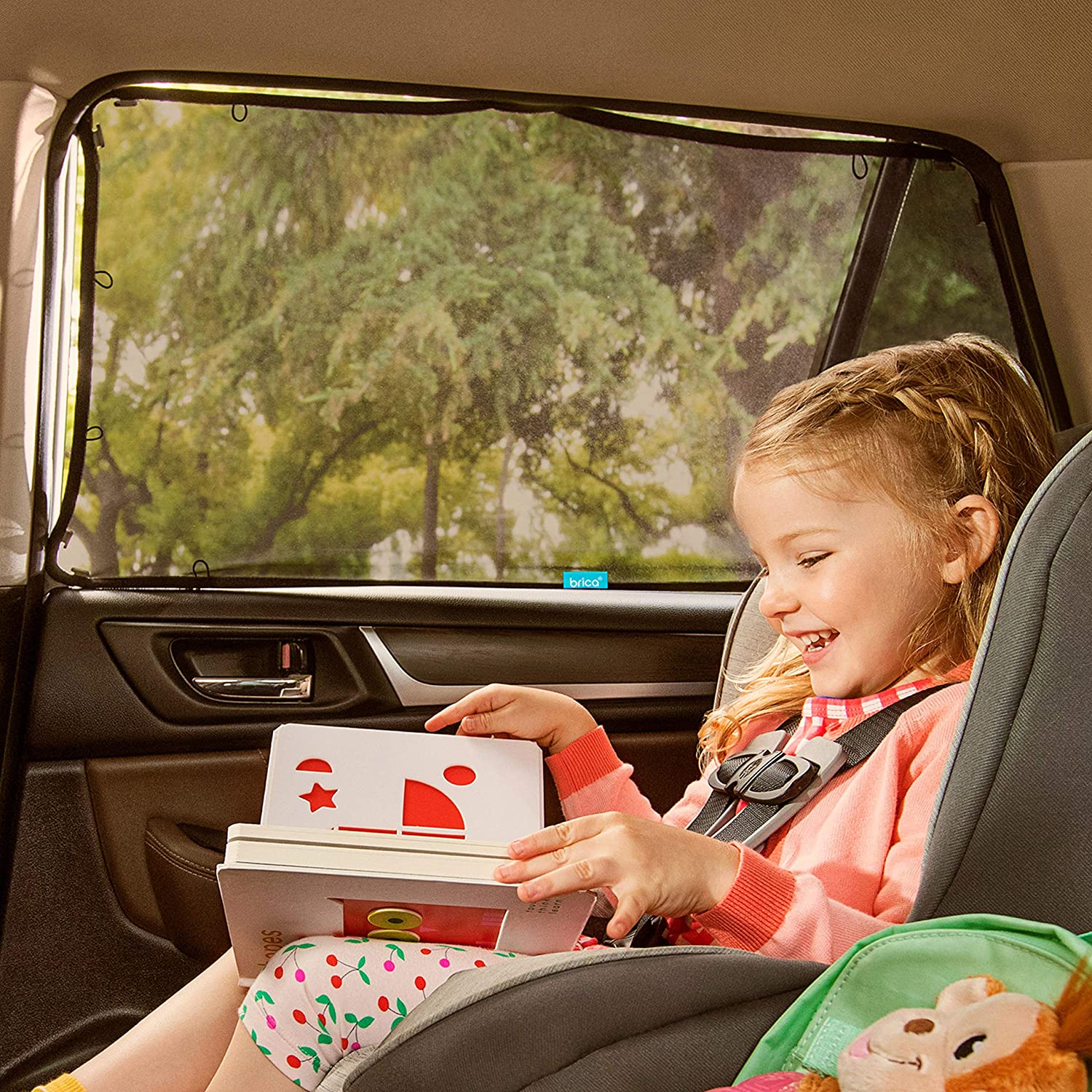
This one surprised me. UVA rays (the ones that age and damage skin without burning) come right through standard car windows. Tinting is the most effective fix, but window clings are a cheaper option. If you go the cling route, choose a static cling style rather than a roll-down shade — you don't want a projectile flying around in a sudden stop.
I've used the Munchkin Brica Magnetic Stretch-to-Fit Sun Shade and the Skip Hop All Season Car Seat Cover and both do the job well.
If you want to check out these picks (and more) I have a full shopping list here.
A few other things that make a real difference
Timing matters more than you think. UV rays are strongest between 10 a.m. and 4 p.m. I'm not suggesting you schedule all outdoor time at 7 a.m. – family life doesn't work that way – but if you have flexibility, earlier mornings and later afternoons are genuinely easier on everyone's skin.
Keep them hydrated. Babies and toddlers don't regulate temperature well yet. They get cold fast and overheat fast. Topping them up on breastmilk or formula throughout the day helps prevent dehydration, especially in heat.
Watch for heat rash. It shows up as tiny red bumps, usually where clothing traps sweat against skin. The fix is simple: cool them down, strip off the layers, give them a lukewarm bath, and let the skin air out. Skip the lotions and creams when it's active — they'll just seal the heat in and make it worse.
What to do if your baby gets sunburned
It happens to the best of us. If your baby ends up with a sunburn, here's what to do:
- Get them out of the sun immediately and into a cool, shaded space
- Cool the skin down with a lukewarm (not cold) damp cloth or a cool bath – avoid ice or very cold water, which can cause shock in small babies
- Keep them hydrated – sunburn draws fluid to the skin surface, so extra breastmilk, formula, or water (for babies over 6 months) helps
- Moisturize gently with an unscented aloe vera gel or gentle lotion once the skin has cooled – avoid anything with lidocaine or benzocaine, which can irritate sunburned skin and aren't recommended for infants
- Watch for signs of sun poisoning – fever, chills, blistering, or extreme fussiness warrant a call to your pediatrician
If your baby is under 1 year old and has any blistering or fever alongside a burn, call your doctor rather than waiting it out. Better to make an unnecessary call than miss something that needs attention.
The short version
You don't need a perfect system. You need a mineral sunscreen you'll actually use, something to block the direct sun, a hat that stays on for more than forty seconds, and the knowledge that doing something is always better than doing nothing.
Sun safety doesn't have to be stressful — it just has to be consistent.
Related: Beach Tips for Babies and Toddlers
This post may contain affiliate links. If you purchase through my links I may earn a small commission at no extra cost to you. Thanks for supporting Pregnant Chicken – it keeps the lights on and supports our free content. Updated February 2026.

Leave a Comment