
By Kate Barr | Behavioral science expert, founder of pip & grow (award-winning child safety enterprise), Forbes Next 1000 honoree | Last updated: January 2026
When the Fisher Price Rock 'N Play was recalled after being linked to approximately 100 infant deaths, it sent shockwaves through the parenting community. I'll be honest with you: as someone who built an entire business around child safety, I still sometimes made choices I knew weren't ideal. Because exhaustion is a powerful force.
Here's what two decades of behavioral science research has taught me: knowing what's safe and actually implementing it at 3 AM when you're on hour six of crying are two completely different things. That's why this guide focuses on both the science and the reality of sleep-deprived parenting.
The bottom line: Safe sleep spaces reduce SIDS and suffocation risk dramatically. Since these are the #1 cause of death for babies under one year, getting this right matters more than almost anything else in your baby's first year.
Table of Contents
- The 5 Non-Negotiables for Safe Sleep
- Hard Truths About Safe Sleep (That Nobody Tells You)
- Making Your Backup Plan Before 3 AM Desperation Hits
The 5 Non-Negotiables for Safe Sleep
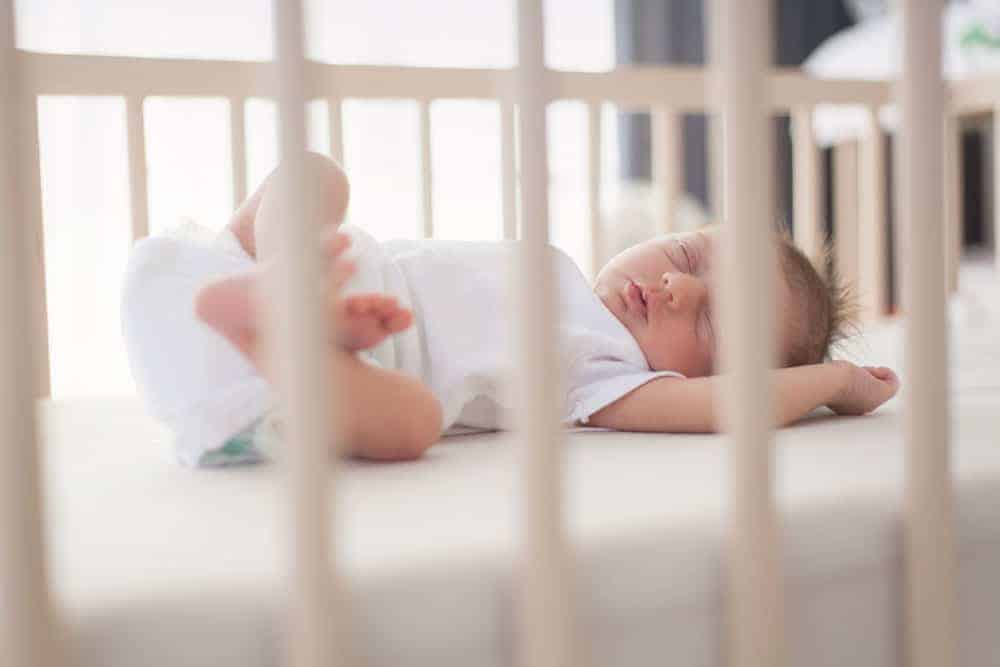
1. A Flat Surface
Try this right now: tuck your chin to your chest and breathe. Now lift your head and breathe normally. Feel the difference?
Any incline – yes, including car seats, bouncers, and those tempting rock 'n plays – pushes your baby's chin toward their chest, restricting their airway. A flat surface keeps that airway open and unobstructed.
2. A Firm Surface
Here's why firmness matters more than you think:
Reason one: Baby mouths are tiny (though they somehow expand to shark-size when latching). A firm mattress won't creep up around their nose and mouth like a soft one can.
Reason two – science time: We breathe in oxygen and exhale carbon dioxide. Carbon dioxide is heavier, so it sinks and pools on the sleep surface. Squishy surfaces trap more CO2. A firm mattress makes it easier to disturb that CO2 pool so your baby breathes fresh oxygen all night. Adults shift position instinctively for fresh air, but babies' neurological development isn't there yet.
3. A Bare Surface
No bumpers. No loose blankets. No toys. No decorative pillows. No nothing until baby turns one.
If the crib looks like it was set up by a strict Eastern European nanny with zero tolerance for nonsense, you're doing it right.
4. A Personal Space
Your baby needs their own protected sleep space. You can put it right next to your bed (or even create a safe space in your bed), but ideally it's not the exact same space you're sleeping in.
5. A Plan (Before 3 AM Desperation)
Exhausted parents make terrible decisions at 3 AM. This is basic behavioral science – decision-making ability plummets when you're sleep-deprived.
Do this today in broad daylight:
- Examine your baby's sleep space critically. What could smother them? Can they get stuck or tangled? Are there cords or heat sources nearby?
- Fix anything that looks sketchy
- Make a backup plan for when baby wakes for the 45th time. If your answer is "bring them into bed," that's okay – just make your bed as safe as possible too
Hard Truths About Safe Sleep (That Nobody Tells You)
Here's the thing nobody mentions in those cheerful safe sleep pamphlets: babies who sleep safely don't sleep as deeply. That's literally the entire point.
Truth #1: Safe Sleep = Lighter Sleep
Most babies in most situations can wake themselves and reposition if they're having trouble breathing. But not all babies can do this, and we have no way to identify which babies can't.
All these safe sleep rules are designed to keep your baby from sleeping so deeply that they can't wake up and save themselves. I know. It's brutal. Safe sleep means crappier sleep for everyone.
Truth #2: Tiny Babies Aren't Supposed to Sleep Through the Night
A healthy six-week-old wakes every 2-3 hours. Full stop. It's developmentally normal and it absolutely sucks for parents.
Anyone promising their magical baby bed will make your newborn sleep longer is either setting you up for unsafe sleep or flat-out lying to you.
Truth #3: Babies Need Time to Adjust
Your baby spent 9-10 months snuggled in the womb, being rocked and fed continuously. Know what pisses them off? Being laid flat on their back, alone, expected to wait hours for food.
Give it 3-4 days for baby to adjust to their safe sleep space. Those days are going to be rough.
Truth #4: Cozy = Potentially Dangerous
If your baby looks adorably snuggled and cozy in their bed, it's probably not safe. Snuggly almost always equals increased suffocation risk.
Keep that space stark and bare for the first year. Then pile in all the loveys and blankets you want.
Making Your Backup Plan
You need a plan for rock-bottom moments before you hit them. This is persuasive communication 101: the decisions you make when you're well-rested and thinking clearly are infinitely better than the ones you make in crisis mode.
Sit down right now and think through: What will you do when you can't take it anymore? If bed-sharing is your safety valve, make your bed as safe as possible in advance. Remove pillows near baby, use a firm mattress, keep blankets away from their face.
Having a plan (even an imperfect one) is better than making panicked choices at 4 AM. Check out: Safe Sleep for Babies: Good, Better, Best for some guidelines.
The Upside (Because You Need Hope)
Babies who use safe sleep spaces are dramatically less likely to die from SIDS or suffocation. Since these are the number one killer of babies under one year old, safe sleep is your top priority for getting that baby to their first birthday.
Keep reading: When Your Baby Hates Sleep
Leave a Comment