
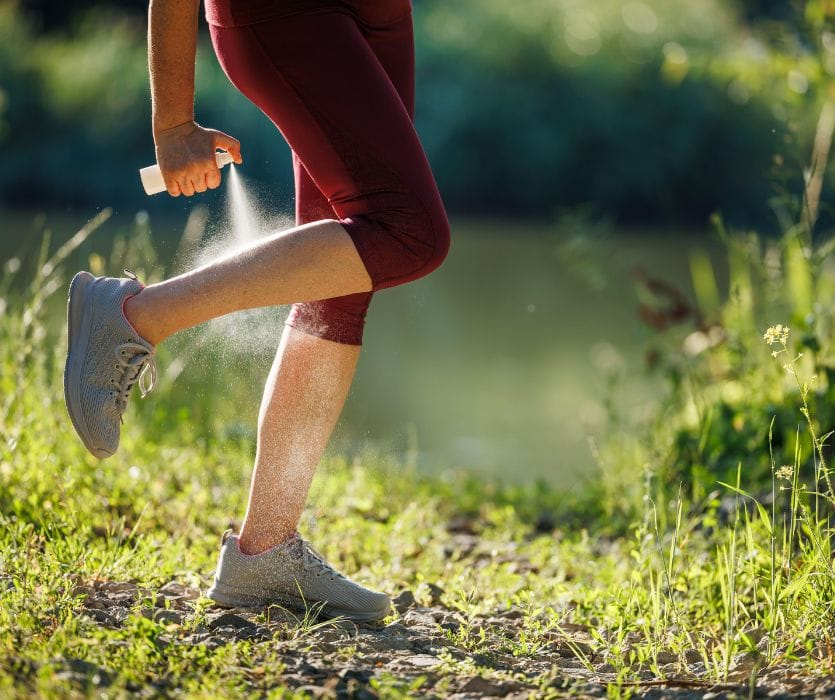
Look, I'm a certified mosquito magnet. I spend my summers cottaging in Canada where the bugs are basically our national bird, and I've been through two pregnancies getting eaten alive while trying to figure out what I could actually use.
When you're pregnant, your increased body temperature and carbon dioxide production literally signal insects to come feast. Add to that your heightened sense of smell (making repellents seem even more offensive) and more sensitive skin, and you've got a recipe for misery.
To add insult to injury, West Nile Virus, Zika, Dengue Fever, Malaria, Lyme Disease, etc., can potentially infect your unborn child, and the risk is real enough that protection matters.
So let's cut through the noise and figure out what actually works.
The DEET Question Everyone's Asking
DEET (diethyl-3-methyl benzamide): It sounds sketchy, looks sketchy on the label, and it absolutely works.
But here's what the research actually shows:
- One study of 897 Thai women found no adverse effects in women who used moderate amounts during their second and third trimesters
- It does cross the placenta and deposits in small amounts in fetal tissue
- No confirmed evidence that proper use poses health hazards to unborn babies or breastfeeding children
The EPA, CDC, and American College of Obstetricians and Gynecologists all agree: the risk from insect-borne diseases far outweighs any theoretical risk from EPA-registered repellents when used correctly.
Bottom line: DEET at 20-30% concentration is considered safe during pregnancy by major health organizations and provides 6-12 hours of solid protection. If you are somewhere that is high risk, this stuff absolutely works and you should use it.
Other Options That Won't Freak You Out
Even though DEET has been deemed safe during pregnancy, it can feel a little heavy handed depending on where you are and what you need. Here are some less intense options you can try.
Picaridin (20% concentration)
This is my personal favorite. It's just as effective as DEET but without the greasy feel or that distinctive chemical smell. Provides 6-12 hours of protection and doesn't damage fabrics or plastics. The CDC recommends it for pregnancy based on low skin absorption, though it hasn't been specifically studied in pregnant women (none of the newer repellents have been). Off! Clean Feel Insect Repellent Aerosol with 20% Picaridin works incredibly well and feels much better on your skin.
IR3535
Popular in Europe, structurally similar to a naturally occurring amino acid. Provides 4-8 hours of protection and tends to be gentler on sensitive skin (which, let's be honest, pregnancy gives you in spades). Also recommended by the CDC but not specifically studied in pregnancy. Warrior DEET Free Bug Shield Pump Spray is the best option I can find in North America (the packaging looks like a teen boy's body spray).
Oil of Lemon Eucalyptus (OLE) or Para-menthane-diol (PMD)
Here's where it gets murky. This plant-derived option has EPA registration and proven effectiveness (4-6 hours of protection). However, there's conflicting guidance: the CDC says don't use it on children under 3, and some experts extend that caution to pregnancy (if it's not safe for young kids, why would it be safe for a fetus?). Other sources list it as EPA-approved for pregnancy. Products like OFF! Botanicals use this ingredient.
A Note About Testing: It is very difficult to study ingredients – "hey, we hear that you're pregnant, would you smear this ingredient on so we can see if your baby ends up with nine belly buttons?" – so products that have been around for a long time often have better data to back them up.
Lighter Options
If you're just trying to avoid nuisance bites (not serious disease) here are some natural options for light bug pressure:
- Cliganic 50 Pack Mosquito Repellent Bracelets - DEET-free, individually wrapped, convenient for kids too
- NATPAT BuzzPatch Mosquito Patches - Plant-based citronella patches that are non-toxic (40 pack)
- Quitch Mosquito Bug Repellent Roll On - Travel-size, great for kids and quick applications
- Vanilla Mozi Natural Outdoor Body Cream - I was sent this to try and honestly? It smells incredible, works really well for low-bug situations, and isn't greasy at all. Anytime I'm wearing it around a campfire, someone will always say, "Who smells so good?"
What Doesn't Work (Save Your Money)
Ultrasonic devices and wristbands - Studies consistently show these don't provide adequate protection. Skip them.
Combination sunscreen-repellent products - These need reapplication at different intervals, leading to either sunburn or overexposure to repellent chemicals. Use separate products.
How to Actually Use Bug Spray When You're Pregnant
- Apply sparingly on exposed skin and on top of clothing – more doesn't mean more protection
- Choose lower concentrations for short outdoor periods; anything over 30% DEET doesn't work better but increases chemical exposure
- Avoid peak mosquito hours (dawn and dusk) when possible
- Don't spray directly on your face – spray hands first, then apply
- Wash treated skin with soap and water when you get inside to minimize exposure
- Wear light-colored, long sleeves and pants when possible for physical barriers
The Bottom Line
Most credible sources still recommend using EPA-registered bug spray during pregnancy to lower the risks that insect-borne illnesses pose. The research isn't perfect – we don't have first trimester studies, and the newer repellents haven't been tested specifically on pregnant women – but the consensus is that protecting yourself from disease-carrying bugs matters more than theoretical risks from properly used repellents.
Look for the EPA registration number on the label, follow application instructions, don't go overboard with concentration or frequency, and don't hesitate to discuss concerns with your healthcare provider.
And if all else fails? Don a hazmat suit with knee socks and do your best Darth Vader impression – bugs won't be the only thing you'll repel.
Last updated: March 2026
Leave a Comment